Best Wall Colors for a Small Bedroom
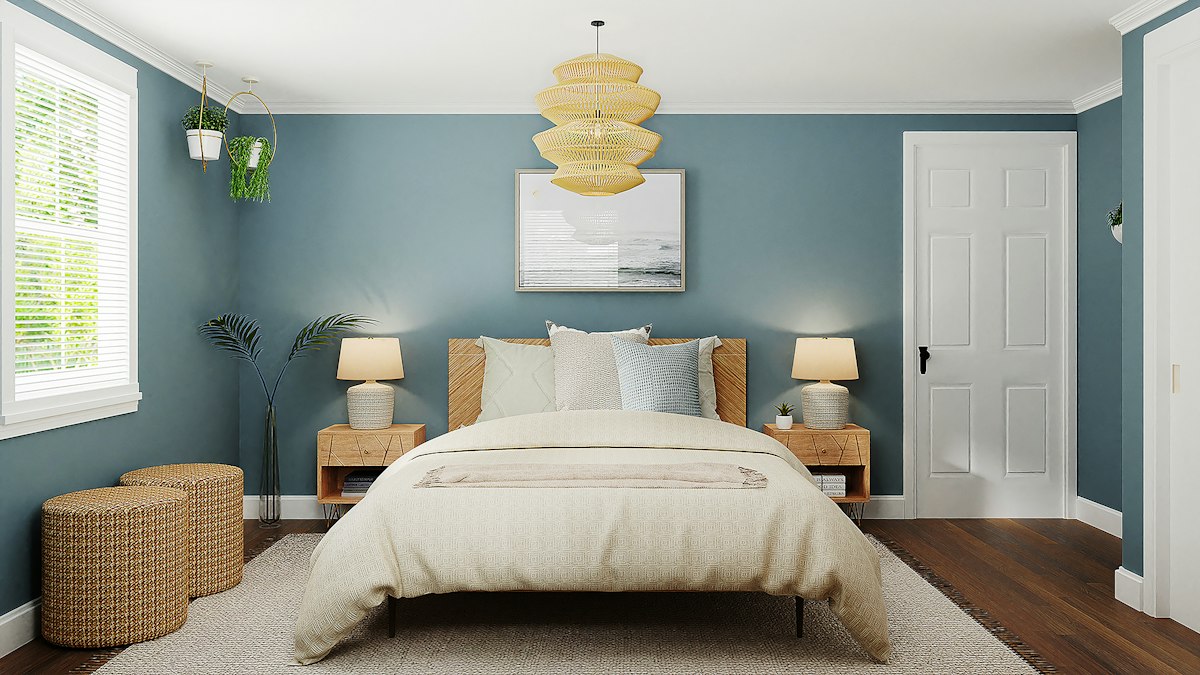
Choosing the right small bedroom wall color is one of the highest-impact decisions you can make in a compact space, because paint controls how much light bounces around the room and how visually heavy the walls feel. Get it right and a tight 10x10 bedroom can read as airy, calm, and intentional; get it wrong and the same room feels like a box. This guide walks through the best paint colors for a small bedroom, how natural light changes the answer, and how to choose shades that also work for staging and resale.
What Makes a Small Bedroom Feel Bigger
Before picking a shade, it helps to understand why certain colors work in compact rooms. It is rarely about the color name itself and almost always about three underlying behaviors: light reflection, contrast, and visual complexity.
Light reflection reduces visual heaviness
Lighter colors reflect more of the light that reaches them, which raises the perceived brightness of the whole room. Darker colors absorb light, which can make walls feel closer than they are. This is why light colors for small bedroom projects are the default recommendation — not because dark rooms are forbidden, but because light walls do more of the work for you.
Low contrast keeps the eye moving
When walls, trim, and ceiling sit in a similar tonal range, the eye travels across the room without hitting hard visual stops. High contrast — crisp white trim against deep walls, or a dark ceiling against pale walls — creates boundaries that emphasize the room's dimensions. In a small bedroom, that usually means the walls feel shorter and the ceiling feels lower.
Busy palettes break up the space
Multiple strong colors, bold patterns, and heavy accent treatments chop a small room into fragments. A restrained palette lets the space read as one continuous volume, which is the single most reliable trick for making a compact bedroom feel larger.
Best Wall Colors for Small Bedrooms
The strongest small bedroom paint ideas cluster into three families: warm whites, soft neutrals, and muted cool tones. Each has a different personality, and all three keep contrast low enough to open up the room.
Warm white, soft off-white, and ivory
Warm white bedroom walls are the most forgiving choice in a small space. Pure bright white can turn cold and clinical, especially in rooms with limited daylight, while warm whites and soft off-whites add just enough cream or beige to feel inviting. Ivory and alabaster tones are particularly good in bedrooms because they flatter skin tones and wood furniture. If you want a single safe answer to "what is the best paint color for a small bedroom," a warm off-white is it.
Pale gray, greige, and pearl
Greige bedroom paint — the gray-beige hybrid — has become the modern neutral of choice because it reads clean without feeling sterile. Pale gray and pearl tones are excellent for a contemporary look, and they pair easily with both cool metals and warm woods. The key is to avoid grays with a strong blue or green undertone in north-facing rooms, where they can turn dingy. Look for greige shades with a hint of warmth, and test them on the wall rather than judging from a paint chip.
Soft blue, misty blue, sage, and muted green
Calming colors for small bedroom spaces tend to be desaturated cool tones. Soft blue and misty blue evoke sky and water, which subtly suggests openness, while sage and muted green bring a grounded, restful quality that suits sleep. Keep saturation low — think dusty, grayed-down versions rather than vivid jewel tones. A muted sage on all four walls with white bedding and light wood furniture is one of the most reliably beautiful small bedroom combinations.
How Natural Light Changes the Best Choice
Two bedrooms painted the same color can look completely different depending on which direction the windows face and how much daylight reaches the walls. Always choose paint in the context of your actual light.
Bright, sun-filled rooms
Rooms with strong southern or western exposure can handle cooler whites and soft gray-blue tones without feeling chilly. In fact, cool tones help balance the warmth of direct sun. If your bedroom gets hours of bright light, you have the most flexibility — this is where you can experiment with slightly deeper neutrals or a soft blue-gray.
North-facing or dim rooms
Rooms with limited natural light benefit from warm whites and creamy neutrals that lift the ambient tone instead of amplifying the gray. Avoid cool grays, icy whites, and strong blue undertones here — they tend to look shadowy and flat. A warm ivory or a light greige with visible warmth will make a dim bedroom feel noticeably brighter.
Test before you commit
Paint large samples — at least a foot square, ideally on two different walls — and live with them for a full day. Check the color in morning light, mid-afternoon, and under your evening lamps. Artificial lighting shifts color temperature significantly, so a shade that looks perfect at noon may turn muddy under warm bulbs. If you want a faster way to preview options, you can visualize a room design with AI and compare palettes before buying a single sample pot.
When to Use Dark Colors in a Small Bedroom
Dark paint in a small bedroom is a legitimate design choice, not a mistake — but it has to be deliberate. The difference between moody and cramped comes down to execution.
Color drenching
Color drenching means painting walls, trim, ceiling, and sometimes doors in the same or closely related shade. Because there are no contrasting edges, the eye reads the room as a single enveloping volume rather than a series of surfaces. Deep navy, charcoal, and dark green work especially well this way, creating a cocoon-like atmosphere that many people find genuinely restful in a bedroom.
The single accent wall
If full color drenching feels like too much commitment, an accent wall small bedroom treatment is the alternative. Paint the wall behind the bed in a deeper shade and keep the remaining walls light. This anchors the room and adds depth without shrinking it. Avoid accenting a short wall or the wall opposite the window — those placements tend to emphasize the room's tightest dimension.
Balance dark walls with light layers
Dark walls need light counterweights: crisp white or cream bedding, pale trim if you are not drenching, light wood tones, linen, and natural textures. Add layered lighting — bedside lamps, a dimmable overhead, and ideally a wall sconce — so the room stays usable after sunset. Without that balance, dark walls can feel heavy rather than sophisticated.
Best Paint Finishes for Small Spaces
Color gets most of the attention, but finish changes how light behaves on the wall and how the room feels to the touch.
Matte and eggshell
Matte and eggshell finishes create a soft, upscale look and minimize the appearance of wall imperfections. Eggshell is the practical middle ground for bedrooms: it has a slight sheen that helps with cleaning but still reads flat and calm. Matte is the most forgiving of uneven drywall and the most flattering under lamplight.
Avoid high-gloss walls
High-gloss paint reflects light sharply, which highlights every bump, seam, and patch in the drywall. In a small bedroom, that reflection can also create glare that feels harsh rather than bright. Reserve gloss for trim and doors, where durability matters more than subtlety.
Match finish to function
If the bedroom is used by children or sees heavy wear, eggshell on the walls and satin on the trim is a sensible combination. For a low-traffic guest room or a staging refresh, matte walls give the best photographic result.
Small Bedroom Color Ideas for Staging and Resale
If the bedroom is going on the market or into a rental listing, the goal shifts from personal taste to broad appeal.
Neutral palettes appeal to more buyers
Neutral bedroom paint for resale consistently outperforms bold choices because it lets buyers project their own furniture and style onto the space. Warm white, soft greige, and pale gray are the safest bets. You can explore how professional staging palettes are applied in real projects through our staging and design services.
Colors that photograph well
Small bedroom staging colors should be chosen with a camera in mind. Soft, airy shades reflect light and make listing photos look brighter and more spacious, while dark or saturated walls can read as heavy and dim on screen. Light neutrals also keep white balance predictable, so photos need less correction.
Virtual staging and listing visuals
If you are marketing a vacant bedroom, virtual staging lets you test multiple palettes and furniture layouts without touching a paint roller. Universally appealing neutrals with one subtle accent — a soft blue headboard wall, for example — tend to perform well in listing thumbnails. For more ideas on presenting small rooms effectively, browse the Arch.AI blog.
Design Pairings That Make the Color Work Harder
Paint is only one layer. These pairings amplify whatever color you choose.
Trim and ceiling
Painting the ceiling and walls the same or a very similar color reduces visual breaks and makes the room feel taller and more open. If you prefer white trim, keep it soft rather than stark — an off-white trim against warm walls reads calmer than bright white. A ceiling one shade lighter than the walls is a classic compromise that adds a subtle sense of height.
Texture and materials
Layer light wood, linen, cotton, and woven textures to soften the space and add depth without adding visual weight. A jute rug, linen curtains hung close to the ceiling, and a chunky knit throw give a neutral room warmth that flat paint alone cannot provide.
Mirrors and minimal furniture
A large mirror opposite or adjacent to the window doubles the light in the room and makes the paint color read brighter. Keep furniture low-profile and leggy so more floor is visible, and choose pieces that match the wall tone rather than fight it. The paint does the heavy lifting; the furniture should stay out of its way.
FAQ
What is the best wall color for a small bedroom?
Warm white, soft off-white, and pale greige are the safest choices because they reflect light and make the room feel larger. They also work with nearly any furniture style and hold up well for resale.
Can you use dark paint in a small bedroom?
Yes, but it works best as a deliberate design choice with good lighting, lighter furnishings, and ideally either full-room color drenching or one accent wall. Half-measures tend to make the room feel smaller.
What color makes a small bedroom look bigger?
Light, low-contrast colors such as warm white, pale blue, and soft gray usually make a small bedroom look bigger. Matching the ceiling and trim to the walls amplifies the effect.
Are neutral colors better for staging a small bedroom?
Yes, neutral colors tend to appeal to more buyers and help the room feel cleaner, brighter, and more spacious in photos. Warm whites and greige are the most reliable options.
Should the ceiling and walls be the same color in a small bedroom?
Painting the ceiling and walls the same or similar color can reduce visual breaks and make the room feel more open. If you want a lighter ceiling, keep it within one or two shades of the wall color.
See Your Small Bedroom in Color Before You Paint
The fastest way to choose confidently is to see the options in your actual room. Arch.AI's AI room design tool lets you upload a photo of your bedroom and preview wall colors, finishes, and furniture pairings in seconds — no samples, no guesswork, no repainting. When you are ready to take the next step, get in touch with our team and we will help you turn the right palette into a room you love.
Ready to design your space?
Try AI-powered room design and transform your photo into a beautifully staged room in seconds.
Try It Now