Virtual Staging vs Traditional Home Staging
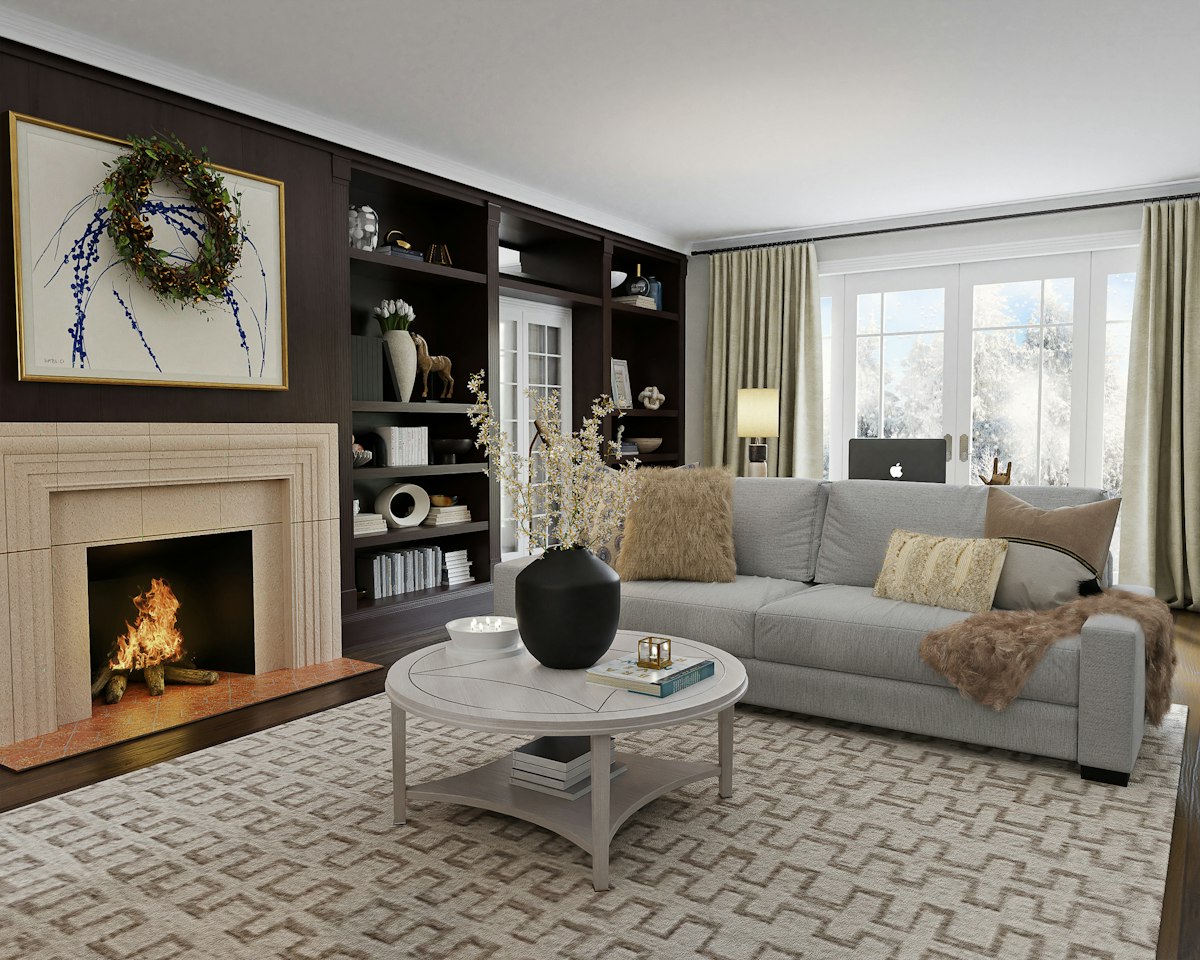
Choosing between virtual staging vs traditional home staging usually comes down to two practical questions: how much will it cost, and how fast can the listing go live? Virtual staging wins on both counts in most cases, delivering furnished listing photos for a fraction of the price in a day or two. Traditional staging delivers a real, walk-through experience at a much higher cost and longer timeline. This guide breaks down pricing, turnaround, ROI, and the situations where each method makes the most sense.
Virtual Staging vs Traditional Home Staging: Quick Comparison
Both approaches solve the same problem: empty or awkward rooms photograph poorly and make it hard for buyers to judge scale, flow, and lifestyle. They solve it in very different ways.
| Factor | Virtual staging | Traditional staging |
|---|---|---|
| Typical cost | $20–$60 per room or photo | $1,500–$6,000+ per home |
| Turnaround | Same day to 48 hours | 3 days to 2 weeks |
| What it changes | Listing photos and marketing assets | The physical showing experience |
| Best for | Vacant listings, fast launches, tight budgets | Open houses, luxury and occupied homes |
| Ongoing cost | Per image, per revision | Monthly furniture rental |
The biggest decision factors for sellers and agents are budget, launch timeline, and whether buyers will walk the property in person or mostly browse it online first. Most buyers do the latter, which is why digital staging has become the default first move for many listings.
What Is Virtual Staging?
Virtual staging is the process of digitally furnishing real estate photos. A photographer captures the empty room, and a designer or AI system adds furniture, rugs, art, lighting, and decor directly into the image. The result looks like a professionally styled room without a single piece of furniture ever entering the property.
Modern workflows rely heavily on AI virtual staging for real estate. Software can detect walls, floors, windows, and perspective lines, then place scale-accurate furniture into the scene. Designers still review output for realism, but the heavy lifting is automated, which is what makes the pricing so low.
One important limitation: virtual staging changes the marketing, not the property. The physical room stays empty. That means it is used almost exclusively for online listing presentation — MLS photos, portal listings, social ads, flyers, and property websites. If you want to see how a room could be laid out before committing to a purchase or renovation, an AI room design tool serves a similar purpose for planning rather than selling.
What Is Traditional Home Staging?
Traditional home staging is physical staging. A stager rents furniture, art, rugs, and accessories, then has them delivered, assembled, and styled inside the home. When the listing sells or the contract ends, everything is removed and returned to inventory.
The workflow is logistics-heavy. It typically includes an initial consultation, a design plan, furniture selection, delivery scheduling, a setup day, and eventually a de-staging day. Each step adds cost and calendar time, and each step depends on availability of inventory, movers, and access to the property.
What traditional staging buys you is presence. Buyers walking through an open house see a finished, aspirational home. Rooms feel larger, flow reads more clearly, and the property photographs and films well for walkthrough videos. For premium listings, that in-person impression is often the entire point.
Cost Breakdown: Virtual Staging vs Traditional Staging
Virtual staging cost per room
Virtual staging cost per room generally lands between $20 and $60, depending on the provider, the complexity of the room, and whether you need revisions. Many services price per photo rather than per room, so a listing with eight staged images might cost $150 to $400 total. Volume packages for brokerages and virtual staging for realtors who list frequently can push the per-image price lower still.
There is no furniture rental, no delivery fee, no storage, no labor, and no monthly carry. You pay once per image, and the asset is yours to use in marketing.
Traditional home staging cost
Traditional home staging cost is a different order of magnitude. A typical single-family home might run $1,500 to $6,000 for a standard staging package, and that figure usually assumes a rental period of one to three months. Extend the listing timeline and the cost climbs, because furniture rental is charged monthly.
The line items behind that number include:
- Design consultation and staging plan
- Furniture, art, and accessory rental
- Delivery, assembly, and styling labor
- Monthly rental renewal if the home does not sell quickly
- De-staging, pickup, and any damage or replacement fees
Vacant homes and luxury properties
Vacant home staging cost tends to be the highest, because an empty property needs everything — furniture for every room, plus artwork, rugs, and lighting to prevent the space from feeling hollow. A vacant three-bedroom home can easily exceed $4,000 for a multi-month rental.
Luxury properties escalate further. High-end stagers use designer furniture and custom pieces, and luxury staging budgets of $10,000 to $20,000 or more are not unusual. Virtual staging scales far more gracefully here: a luxury listing might use premium 3D renderings at $50 to $150 per image, which is still a small fraction of a physical staging invoice.
Speed and Turnaround Time
Virtual staging turnaround time
Virtual staging turnaround time is measured in hours, not weeks. Standard delivery is often 24 to 48 hours, and many providers offer same-day or rush options for an added fee. Because nothing needs to be shipped or scheduled, the only real constraint is the photo shoot and the editing queue.
That speed matters more than it sounds. If your photographer shoots on Tuesday and you can publish staged images on Wednesday, the listing goes live while buyer attention is still fresh. You are not waiting on a delivery window or coordinating access to a vacant property.
Traditional staging timeline
Traditional staging typically takes several days to two weeks from approval to completion. Consultation and design take a few days, furniture availability has to be confirmed, and delivery plus setup usually consumes a full day or more. In busy seasons, scheduling can stretch further.
Every one of those days is a day the listing is not on the market. For sellers in a competitive price band or a cooling market, delay has a real cost — sometimes larger than the staging invoice itself.
Rapid refreshes and style changes
This is where digital staging pulls clearly ahead. If a listing stalls, you can restage the same photo in a different style — modern farmhouse, minimalist, mid-century — in a day or two. If you need seasonal or lifestyle variations for ad testing, you can produce several versions of the same room. With physical staging, changing the look means new furniture, new labor, and a new invoice. For more layout and style inspiration, browse design ideas.
Best Use Cases for Each Staging Method
When virtual staging is the better choice
Virtual staging is usually the strongest option when:
- The home is vacant and the priority is filling listing photos with believable furniture
- You need to launch fast — within days, not weeks
- The seller is budget-sensitive or unwilling to fund a multi-month rental
- The property is an investment, flip, or rental where in-person styling adds little value
- You want to test multiple design styles against buyer response
When traditional staging is the better choice
Traditional staging earns its cost when:
- The home will host open houses and private showings at scale
- The property is luxury or architecturally distinctive and needs a physical wow factor
- The home is occupied and needs decluttering, depersonalizing, and partial restyling
- Buyers in the market expect a turnkey, move-in-ready presentation
Property type considerations
Apartments and condos are often ideal for virtual staging. They are typically vacant, compact, and photographed heavily for online portals, so a handful of staged images covers most of the marketing. Single-family homes benefit from a hybrid approach: virtual staging for the listing photos, plus light physical styling — fresh paint, updated lighting, a few key furniture pieces — for showings. Large or luxury homes are where full traditional staging most often justifies the spend. If paint is part of your refresh, see wall color guidance before you commit.
ROI and Buyer Impact
Staged photos consistently outperform empty-room photos in click-through and showing requests. Buyers scrolling a portal decide in seconds, and a room with a bed, sofa, and rug communicates scale and possibility in a way an empty box never will. Virtual staging captures most of that benefit at a tiny fraction of the cost, which is why the cost-to-impact ratio is so favorable for online marketing.
Traditional staging adds something digital cannot: the feeling of standing inside a finished home. At open houses, that emotional response can shorten the gap between interest and offer, particularly at higher price points where buyers expect a polished experience.
The practical ROI question is not 'which is better' but 'where does each dollar work hardest?' For most listings, the highest-return spend is getting strong staged images in front of buyers quickly. Physical staging is an upgrade you add when the property and price point can absorb it. You can explore more presentation strategies on the blog or review full services for listing marketing.
How to Choose the Right Staging Option
A simple decision framework
- Budget: Under $500 total? Virtual staging. Over $3,000 available and a premium price point? Consider traditional.
- Timeline: Need photos live this week? Virtual staging. Can wait two weeks? Traditional is viable.
- Property condition: Vacant and clean? Virtual staging handles it. Occupied and cluttered? Physical styling first.
- Target buyer: Online-first, price-sensitive, or investor buyers respond well to digital staging. Luxury and relocation buyers often expect physical staging.
- Showing volume: Heavy open house traffic justifies physical staging. Photo-driven listings do not.
The hybrid approach
Many agents land on a hybrid: virtual staging for the MLS and portal photos, plus light physical styling — decluttering, paint touch-ups, updated light fixtures, a few statement pieces — to improve the in-person experience. This balances cost, speed, and realism, and it avoids the biggest traditional staging expense, which is furniture rental.
If you want to preview layouts and furniture styles before committing to either path, Arch.AI's AI room design lets you generate and compare concepts in minutes. When you are ready to plan a listing strategy, review services to talk through options.
FAQ
Is virtual staging cheaper than traditional home staging?
Yes. Virtual staging is usually a fraction of the cost because it avoids furniture rental, movers, storage, and onsite setup.
How much faster is virtual staging than traditional staging?
Virtual staging can often be delivered in hours or 1–2 days, while traditional staging may take several days to two weeks depending on logistics.
Does virtual staging work for vacant homes?
Yes. It is especially effective for vacant homes because it helps buyers visualize scale, layout, and style in listing photos.
When is traditional staging better than virtual staging?
Traditional staging is better when the home needs an in-person presentation upgrade, such as open houses, luxury listings, or occupied homes.
Can virtual staging and traditional staging be used together?
Yes. Many agents use virtual staging for online marketing and light physical styling for showings to balance cost, speed, and realism.
Ready to stage your next listing in hours instead of weeks? Try Arch.AI's AI room design to generate furnished, on-brand room concepts from a single photo — then publish faster and spend less.
Ready to design your space?
Try AI-powered room design and transform your photo into a beautifully staged room in seconds.
Try It Now