How AI Room Design Helps Agents Sell Faster
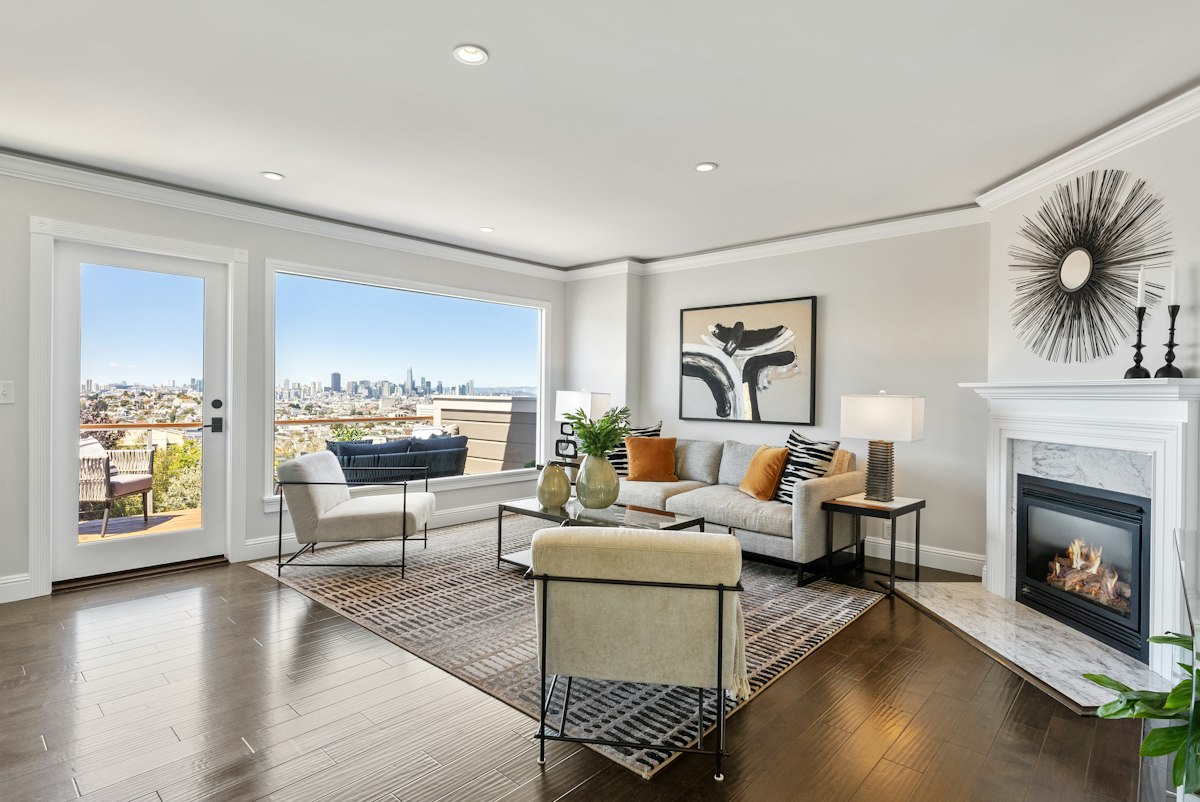
AI virtual staging for real estate has moved from a clever marketing experiment to a core part of how listings get sold. Instead of leaving buyers to squint at empty rooms and dated carpet, agents can now transform a plain photo into a furnished, well-lit, buyer-ready space in minutes. The result is a listing that earns more clicks, more showings, and often a faster path to closing.
What AI room design is
AI room design is the use of generative and image-editing models to furnish, restyle, or refresh a photograph of a real room. You upload a photo of an empty living room, a cluttered bedroom, or a kitchen stuck in 1998, and the software returns a version of that same space with realistic furniture, lighting, textures, and decor applied.
For real estate, this is usually called virtual staging. It is not a rendering, and it is not a floor plan. It is the actual room, photographed as it exists, with a design layer added on top.
How AI transforms empty or dated room photos
Modern tools analyze the geometry of the room: wall lines, window placement, floor plane, ceiling height, and perspective. From there, the model places furniture at a believable scale, matches shadows and light direction, and applies a cohesive style. A good output looks like a professionally staged photo, not a collage.
AI staging vs. physical staging
Physical staging means renting furniture, hiring movers, and paying a stager to dress a property in person. It can cost thousands of dollars per home and takes days or weeks to schedule. AI staging costs a fraction of that and takes minutes, which makes it practical for the many listings that would never justify a full staging budget.
The trade-off is real: physical staging changes the actual experience of walking through the home, while AI staging changes the marketing. Most agents use both, reserving physical staging for high-end or slow-moving properties and using virtual staging everywhere else.
Why visual presentation matters in real estate
Almost every buyer's first showing happens on a screen. Before anyone books a visit, they scroll through photos on a portal, compare listings side by side, and decide in seconds whether a property is worth their time.
Buyers respond to furnished, appealing spaces
Empty rooms are hard to read. Without furniture, buyers struggle to judge scale, imagine traffic flow, or understand how a space could function. A furnished image answers those questions instantly and gives the eye something to anchor on.
Well-styled photos also trigger an emotional response. Buyers are not evaluating square footage in the abstract; they are imagining their life in the home. Design is what makes that imagination possible. If you need inspiration, browse design ideas for different room types and styles.
Strong listing photos increase clicks and showings
Listing photos are the highest-leverage marketing asset an agent controls. Better photos produce higher click-through rates on portals, more saves and shares, and more showing requests. Weak photos do the opposite, and no amount of copywriting compensates.
This is why AI interior design for listing photos has become a standard step in the marketing workflow rather than an optional add-on.
How AI room design helps listings sell faster
The connection between better visuals and faster sales is not just aesthetic. It runs through buyer psychology and through the mechanics of how listings get attention.
Buyers can picture themselves in the home
Staged images give buyers a mental script. They can see where the sofa goes, where the dining table fits, and how the morning light lands in the kitchen. That mental rehearsal is a powerful driver of intent, and it shortens the gap between 'interesting' and 'I want to see this.'
When a buyer can visualize living in a space, they arrive at the showing already partly sold. Conversations shift from 'what would we do with this room?' to 'how soon can we move in?'
Fewer days on market, stronger offers
Listings that generate more early engagement tend to move faster. More clicks lead to more showings, more showings lead to more offers, and competing offers reduce the pressure to drop price. Agents who use virtual staging for vacant homes consistently report that the images do the heavy lifting in the first two weeks, which is when a listing either builds momentum or starts to stall.
Better presentation supports stronger inquiries
Presentation also filters the quality of interest. Buyers who respond to a well-staged listing arrive with realistic expectations, because the photos accurately show the space. That means fewer wasted showings and more serious conversations.
Benefits of AI room design for real estate agents
Lower costs and faster turnaround
Traditional staging requires a budget approval, a schedule, and a crew. AI staging requires a photo. That difference matters most in the listings where speed is everything: a new listing that needs to go live on a Thursday, a price reduction that needs fresh creative, or a vacant property that has been sitting for weeks.
Faster home sale staging software also removes the coordination problem. There is no furniture to deliver, no staging date to negotiate with the seller, and no teardown after the open house.
More listing-ready photos without the logistics
Agents can shoot a property with a phone or a camera, upload the images, and have a full set of styled photos the same day. That means every listing gets the same baseline quality, regardless of budget or timeline.
Scale design changes across properties and room types
Once the workflow is in place, it scales. A single agent can produce living rooms, bedrooms, home offices, and outdoor spaces across an entire portfolio, testing different styles to see what resonates with local buyers. If you want to see how this fits into a broader marketing stack, the services overview is a good starting point. You can also explore wall color ideas to refresh a room without a full renovation.
Best use cases for AI virtual staging
Vacant homes that look cold or hard to read
Vacant properties are the classic use case. Empty rooms photograph as smaller and less inviting than they are, and buyers consistently undervalue spaces they cannot interpret. Virtual staging for vacant homes solves this directly by giving every room a clear purpose.
Cluttered or tenant-occupied rooms
Tenant-occupied properties are difficult to photograph well. Personal belongings, furniture placement, and clutter distract from the architecture. AI staging can present a clean, neutral version of the room for marketing while the property remains occupied and untouched.
Dated interiors that need modern styling
Older finishes do not have to define the listing. A real estate AI room redesign can show the same room with updated styling, helping buyers see potential instead of problems. This is especially useful for properties where renovation is likely but not yet done.
How to use AI room design in a listing workflow
Step 1: Upload room photos and choose a style
Start with clean, well-lit photos taken from a corner at eye level. Wide angles and natural light produce the best results. Then choose a style that matches the property and the likely buyer: modern minimal, warm transitional, Scandinavian, or classic.
Step 2: Generate multiple versions for different buyer profiles
One room can support several versions. A downtown condo might perform better with a sleek, contemporary layout, while a family home in the suburbs may respond to warmer, more traditional styling. Generating a few options lets you test what the local market reacts to.
Step 3: Publish across MLS, social, email, and ads
MLS-ready virtual staging means images that meet platform requirements, including correct sizing and clear labeling where the MLS requires disclosure that a photo has been virtually staged. From there, reuse the same assets in social posts, email campaigns, paid ads, and property websites. One photo shoot becomes a month of content.
Step 4: Keep listing pages fast
Slow-loading pages lose buyers before they see the photos. Compress images, use modern formats like WebP or AVIF, lazy-load below-the-fold visuals, and avoid heavy sliders. If your listing pages use a large hero image, that image is often the Largest Contentful Paint (LCP) element. Set explicit width and height, preload it, and serve it from a fast CDN so the page feels instant. Fast pages improve both user experience and search visibility, which gives your listing creative a better chance to convert.
How to measure the impact of AI room design
Once you start using AI staging, track the metrics that matter to sellers: listing views, saves, showing requests, and days on market. Compare similar properties in your market that used virtual staging against those that did not. You can also test different styles on the same room to see which one drives more engagement.
For a deeper look at how presentation affects buyer behavior, our blog covers listing photo best practices and marketing workflows. The key is to treat virtual staging as a measurable part of your listing strategy, not just a one-time edit.
FAQ
How does AI room design help real estate agents sell faster?
It makes listings look more appealing online, helps buyers visualize the space, and can increase clicks, showings, and buyer confidence. More early engagement typically translates into faster offers.
Is AI virtual staging better than physical staging?
It is usually faster and much more affordable, making it ideal for marketing vacant or outdated homes at scale. Physical staging still has an advantage for in-person showings at the high end of the market.
Which listings benefit most from AI room design?
Vacant homes, cluttered rooms, tenant-occupied properties, and homes with dated interiors benefit the most. These are the listings where buyers struggle most to imagine the space.
Can AI room design improve listing photos?
Yes. It can turn plain room photos into polished, styled visuals that are more attractive to buyers, while keeping the actual room structure accurate.
Do I need to disclose virtual staging?
Disclosure rules vary by MLS and region. Check your local MLS guidelines and label virtually staged photos as required. When in doubt, disclose clearly so buyers know what they are seeing.
Turn empty rooms into faster sales
Every listing starts with a first impression, and increasingly that impression is a photo on a screen. Arch.AI's AI room design lets agents furnish, restyle, and refresh any room in minutes, so vacant and dated properties finally look as good as they deserve to. If you are ready to see what it can do for your next listing, try it now and we will walk you through it.
From ideas to business use
Furniture retailers & interior studios
Compare a room photo, product references and an existing AI result. Check shape, colour and measurements before recommending products.
See the example and workflow →Tile showrooms
Discuss flooring choices using a visual concept. Use physical samples and room measurements for the final decision.
See the example and workflow →Property agents & developers
Explore staging ideas for listings. Show the original photo and disclose the AI concept.
See the example and workflow →Ready to design your space?
Try AI-powered room design and transform your photo into a beautifully staged room in seconds.
Try It Now